The Problem: Paper Forms Are Everywhere and Nobody Wants to Type Them
Despite decades of digital transformation, paper forms persist. Patient intake forms. Government applications. School enrollment. Insurance questionnaires. Field surveys.
Why? Because:
- Not everyone has a device — Elderly patients, rural areas, quick in-person visits
- Regulations require it — Some jurisdictions mandate paper records
- It's faster for the user — Filling a paper form takes 2 minutes, navigating a web form takes 5
- No internet needed — Field work, disaster relief, remote locations
But someone still has to transcribe those paper forms into digital systems. And handwritten forms are the worst — messy handwriting, checkboxes that are half-filled, signatures that overlap with fields.
A medical clinic processing 100 patient forms per day? That's 2-3 staff hours of pure data entry. Every. Single. Day.
What if the paper form could digitize itself?
What We Built
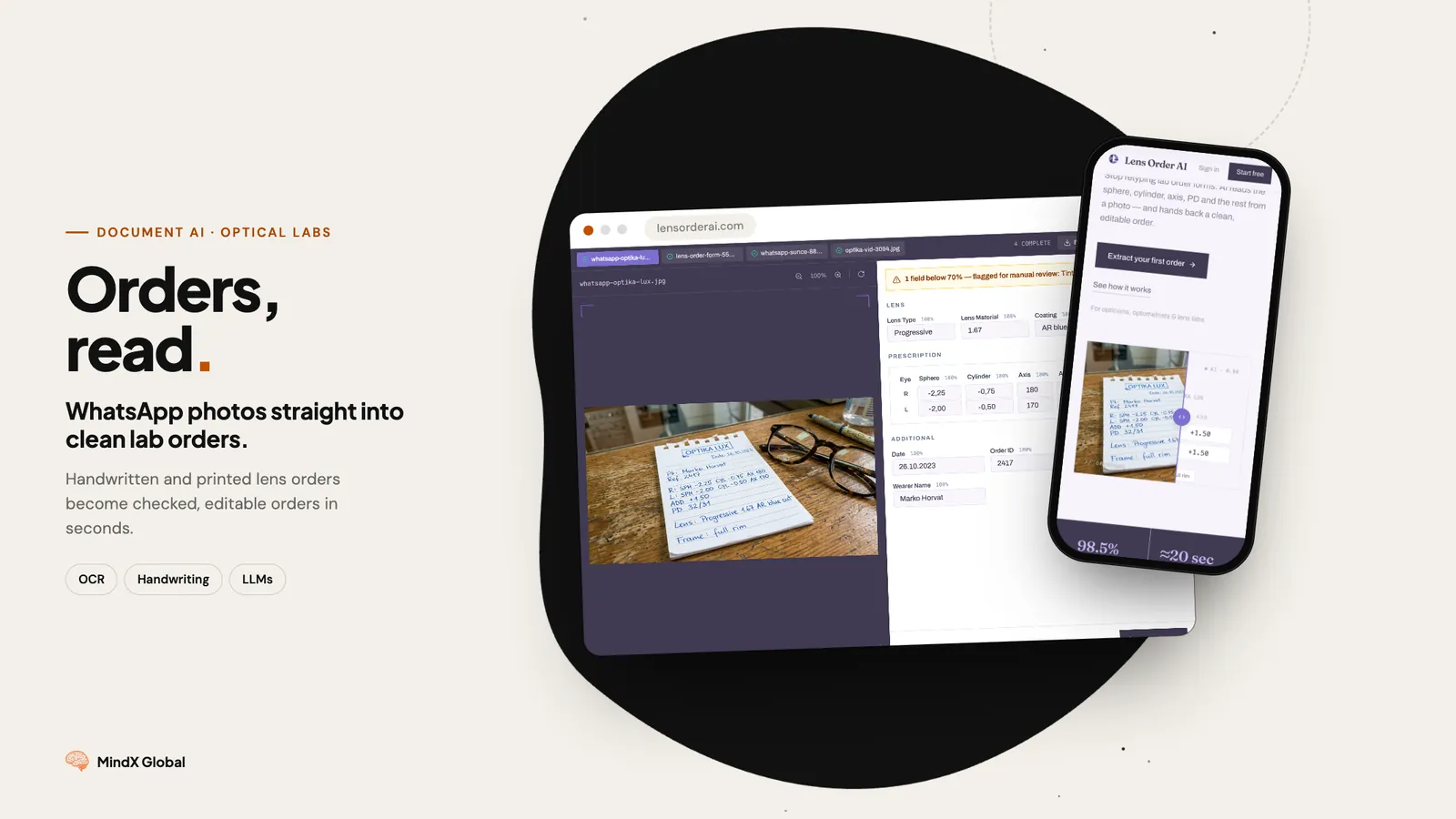
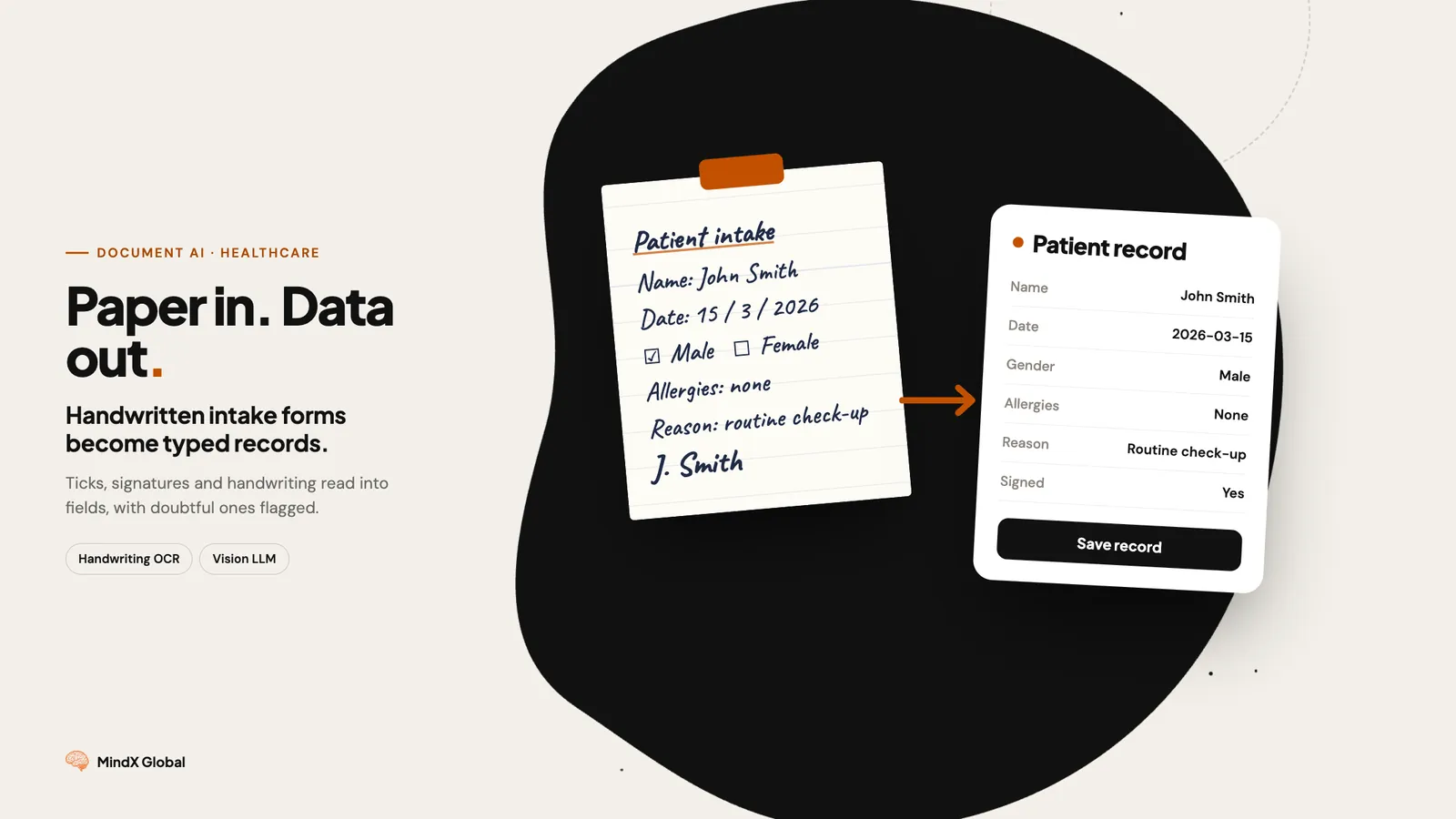
An AI system that reads handwritten forms and maps every field value to its corresponding label — checkboxes, text fields, dates, and even signatures.
The Approach
1. Template Registration First, upload a blank version of your form. The system identifies:
- Field labels ("Patient Name:", "Date of Birth:")
- Field regions (where the answer goes)
- Field types (text, checkbox, date, signature, multi-choice)
This is a one-time setup per form type.
2. Form Processing When a filled form is scanned or photographed:
- Alignment — The system aligns the filled form to the blank template, correcting for rotation, skew, and scale differences
- Region Cropping — Each field region is isolated
- Field Recognition — Each cropped region is processed based on its type:
| Field Type | How We Read It |
|---|---|
| Text fields | Handwriting recognition via multimodal AI |
| Checkboxes | Fill detection (checked, unchecked, crossed) |
| Dates | Date pattern recognition + format normalization |
| Signatures | Presence detection (signed or not) |
| Multi-choice | Circle/check position mapping to options |
| Numbers | Digit recognition with context validation |
3. Structured Output Every field becomes a key-value pair:
Patient Name: John Smith
Date of Birth: 1985-03-15
Gender: Male (checked)
Allergies: No Known Allergies (checked)
Reason for Visit: Routine Check-up (checked)
Signature: Present
The Hard Parts
Handwriting Variability
Everyone writes differently. A doctor's "a" might look like an "o" to a machine. We use context-aware recognition — if the field is "State" and the handwriting could be "CA" or "GA", we use the zip code field to disambiguate.
Checkbox Ambiguity
People check boxes in creative ways: checkmark, X, filled circle, scribble, or a line through the box. Some people check outside the box. We trained on thousands of real-world checkbox styles to handle all of them.
Form Condition
Forms get folded, stained, torn, photocopied (sometimes multiple times). Coffee stains overlap with text fields. We built robust preprocessing to handle degraded forms while flagging areas where confidence is low.
Multi-Language Handwriting
Patient forms in multilingual communities might have names in Latin, Cyrillic, Arabic, or CJK characters — sometimes on the same form. Our model handles mixed-script handwriting.
Results
| Metric | Manual Transcription | Our System |
|---|---|---|
| Time per form | 3-5 minutes | 12 seconds |
| Text field accuracy | ~96% (human) | 93% |
| Checkbox accuracy | ~99% (human) | 98% |
| Daily capacity (1 person) | 100-150 forms | 3,000+ forms |
| Error type | Random typos | Consistent, flagged |
For a healthcare clinic processing 120 intake forms per day:
- Before: 2 staff members on data entry (6 hours/day combined)
- After: 30 minutes of review for flagged fields
- Annual savings: $45,000 in labor costs
- Bonus: Patient data available in EHR before the appointment starts
Who This Is For
- Clinics with paper intake and consent forms
- Government offices typing up applications and permits
- Schools and universities handling enrolment forms
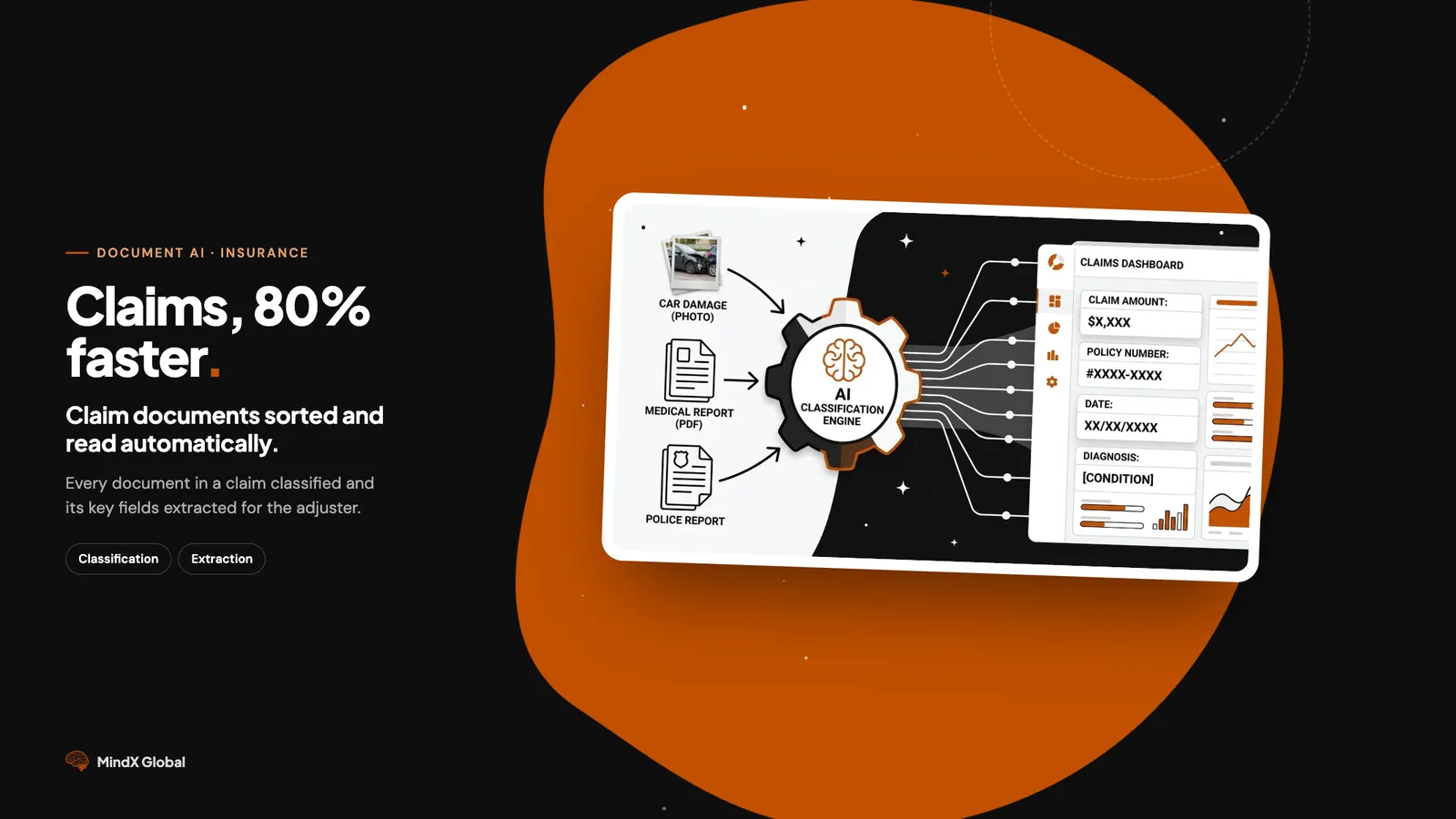
- Insurers reading handwritten claim forms
- Charities and field teams collecting surveys on paper in remote places
- Any organisation that still gets paper forms and needs the data in a system